Introduction
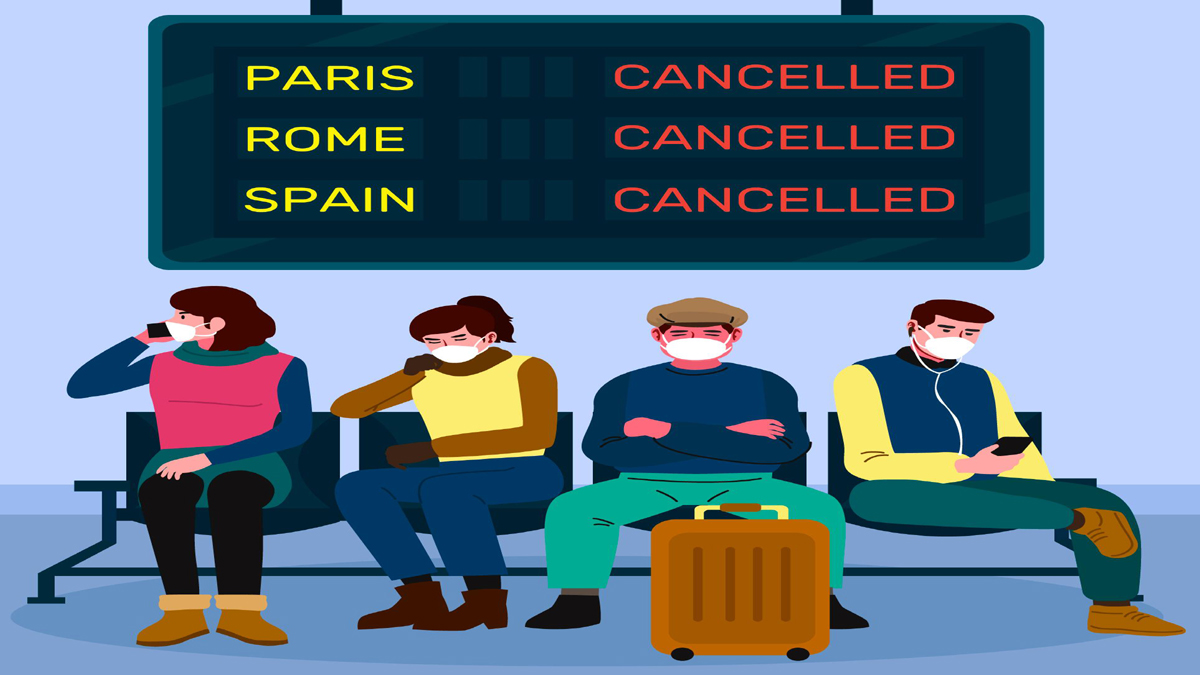
A confirmed flight ticket does not always guarantee a smooth journey. Flights may be cancelled at short notice, delayed for several hours or overbooked, leaving passengers stranded at airports. Sometimes passengers are even denied boarding despite holding confirmed reservations.
Many travellers accept whatever alternative the airline offers because they are unaware of their legal rights. However, Indian aviation regulations provide specific protections relating to flight cancellations, delays, denied boarding and involuntary downgrading.
The Directorate General of Civil Aviation (DGCA) has issued Civil Aviation Requirements (CAR), Section 3, Series M, Part IV, which prescribe facilities and compensation in specified circumstances. Understanding these rules can help passengers make informed decisions when their travel plans are disrupted.
Which Law Protects Air Passengers in India?
The principal regulatory framework for flight disruptions is the DGCA’s Civil Aviation Requirements, Section 3, Series M, Part IV, titled Facilities to be provided to passengers by airlines due to denied boarding, cancellation of flights and delays in flights.
The current revision relevant to these issues is Revision 4, dated 25 January 2023, effective from 15 February 2023.
The requirements apply to scheduled and non-scheduled operators. The responsibility generally rests with the airline operating the flight.
The rules do not mean that every inconvenience automatically attracts financial compensation. The passenger’s entitlement depends on the reason for disruption, the notice provided, the flight duration and the alternative arrangements offered.
What Are Your Rights When an Airline Cancels Your Flight?
Under the DGCA requirements, airlines are expected to inform passengers about cancellations at least two weeks before the scheduled departure and arrange an alternative flight or refund acceptable to the passenger.
Where cancellation is communicated less than two weeks before departure but at least 24 hours before the scheduled departure, the airline must offer an alternative flight or refund, as acceptable to the passenger.
If the airline fails to provide the required notice, the passenger may be entitled to an alternative flight or a full ticket refund along with compensation, subject to the applicable conditions.
The prescribed compensation is:
- Flights with block time up to one hour: ₹5,000 or the booked one-way basic fare plus airline fuel charge, whichever is less.
- Flights with block time above one hour and up to two hours: ₹7,500 or the booked one-way basic fare plus airline fuel charge, whichever is less.
- Flights with block time above two hours: ₹10,000 or the booked one-way basic fare plus airline fuel charge, whichever is less.
These amounts are subject to the regulatory conditions. Compensation may not be payable when extraordinary circumstances beyond the airline’s control caused the cancellation despite reasonable measures being taken.
What If Your Flight Is Delayed for Several Hours?
A flight delay does not automatically entitle every passenger to cash compensation. However, the DGCA requires airlines to provide certain facilities when specified delay thresholds are reached.
For passengers who have checked in on time, the airline must provide meals and refreshments when the expected delay reaches:
- Two hours or more for flights with block time up to two and a half hours.
- Three hours or more for flights with block time above two and a half hours and up to five hours.
- Four hours or more for other flights.
For domestic flights expected to be delayed by more than six hours, the airline must offer an alternative flight within six hours or a full refund.
If the total delay exceeds 24 hours, or exceeds six hours for flights scheduled to depart between 8 PM and 3 AM, hotel accommodation, including transfers, must be offered in accordance with the applicable requirements.
Therefore, passengers should ask the airline about the reason for the delay and the facilities available rather than assuming that they must arrange everything themselves.
Can an Airline Deny Boarding Despite a Confirmed Ticket?
Yes, denied boarding can occur when more passengers hold confirmed bookings than there are available seats. This practice is commonly associated with overbooking.
However, airlines cannot simply refuse boarding without following the prescribed procedure.
Under the DGCA rules, the airline must first seek volunteers willing to surrender their reservations in exchange for benefits offered by the airline.
If a passenger is involuntarily denied boarding because of overbooking, compensation depends on the alternative flight offered:
- If the alternative flight is scheduled to depart within one hour of the original departure, the airline is not required to pay compensation under this provision.
- If the alternative flight is scheduled within 24 hours, compensation is 200% of the booked one-way basic fare plus airline fuel charge, subject to a maximum of ₹10,000.
- If the alternative flight is scheduled more than 24 hours later, compensation is 400% of the booked one-way basic fare plus airline fuel charge, subject to a maximum of ₹20,000.
- If the passenger does not choose the alternative flight, the airline must provide a full ticket refund along with compensation of 400% of the booked one-way basic fare plus airline fuel charge, subject to a maximum of ₹20,000.
These provisions apply subject to the regulatory requirements, including timely reporting for boarding and the absence of valid grounds such as safety, security or inadequate travel documents.
What If You Are Moved to a Lower Travel Class?
Suppose a passenger purchases a business-class ticket but the airline involuntarily places them in economy class.
This is known as downgrading. The DGCA has prescribed reimbursement for such situations.
For domestic flights, the airline must reimburse 75% of the ticket cost, including taxes. For international flights, the reimbursement is 30%, 50% or 75%, depending on the distance travelled.
Passengers should retain their original ticket, boarding pass and any written communication confirming the change in travel class.
What Should Passengers Do When Their Baggage Is Lost or Damaged?
Flight disruption is not the only problem passengers may face. Checked-in baggage may also be delayed, lost or damaged.
Passengers should immediately report the issue at the airline’s baggage assistance counter before leaving the airport. They should obtain a written complaint reference or Property Irregularity Report and preserve their baggage tag, boarding pass and receipts for necessary expenses.
Baggage liability is governed by separate applicable aviation requirements and, for international journeys, potentially by international conventions. The amount recoverable depends on the circumstances and the applicable legal framework. Passengers should not assume that the compensation amounts prescribed for flight cancellations or denied boarding also apply to baggage claims.
How Can You File a Complaint Against an Airline?
Passengers should follow a documented grievance process:
- Submit a written complaint to the airline through its official customer-support channel.
- Mention the PNR, flight number, travel date and details of the disruption.
- Clearly state the refund, compensation or assistance being requested.
- Preserve the complaint reference number and all responses.
- If the airline does not resolve the matter satisfactorily, submit a grievance through the Ministry of Civil Aviation’s AirSewa platform.
- Where appropriate, passengers may also approach the relevant statutory authority or consumer commission under applicable law.
The Ministry’s AirSewa platform provides grievance registration, communication with aviation stakeholders and escalation facilities.
Recent Passenger-Facilitation Directions Issued in 2026
On 18 March 2026, the Ministry of Civil Aviation announced additional passenger-facilitation directions through the DGCA.
These include allocating at least 60% of seats on a flight free of charge, making efforts to seat passengers travelling under the same PNR together, improving transparency concerning the carriage of sports equipment and musical instruments, and displaying passenger rights prominently across airline websites, booking platforms and airport counters.
The directions also emphasise communicating passenger entitlements in regional languages. These measures are intended to improve transparency and make air travel more passenger-friendly.
Frequently Asked Questions
1. Can I claim compensation if my flight is delayed by two hours?
Not automatically. Depending on the flight’s block time and the applicable conditions, the airline may have to provide meals and refreshments. Cash compensation is not payable merely because a flight is delayed by two hours.
2. Can an airline cancel my confirmed flight without informing me?
Airlines must follow the prescribed cancellation-notice requirements. Failure to provide the required notice may create an entitlement to an alternative flight or refund and, where applicable, compensation.
3. Is a confirmed ticket enough to claim denied-boarding compensation?
A confirmed ticket alone is not sufficient. The passenger must satisfy the applicable reporting and boarding conditions, and the denial must fall within the circumstances covered by the DGCA rules.
4. Can an airline force me to accept a travel voucher instead of cash compensation?
The DGCA rules permit compensation through cash, bank transfer or travel vouchers when the passenger signs an agreement accepting the voucher.
5. Where can I complain if the airline refuses to resolve my issue?
You can raise a grievance through the airline’s complaint mechanism and subsequently use the AirSewa portal or app. Other statutory remedies may also be available depending on the nature of the dispute.
Conclusion
Air passengers in India have legal protections against certain forms of unfair treatment during flight disruptions. The DGCA framework provides for refunds, alternative flights, meals, accommodation and financial compensation in specified circumstances.
Passengers should understand that each remedy has its own eligibility conditions. Keeping booking confirmations, boarding passes, baggage tags and written communications can make a significant difference when pursuing a claim.
Knowing your rights before travelling can help you respond confidently when an airline cancels a flight, delays a journey or denies boarding.
Legal Disclaimer: This article is intended for general legal education and awareness. It is not a substitute for professional legal advice. Passenger entitlements depend on the applicable DGCA requirements, the facts of the incident and any relevant international aviation rules.