Introduction
Marriage is a legally and socially recognized relationship in India, but not all marriages last forever. When disputes arise and reconciliation becomes difficult, couples may consider ending or modifying their relationship legally. Two primary legal options available are divorce and legal separation.
While these terms are often used interchangeably, they have very different meanings and legal consequences. Divorce completely ends the marital relationship, whereas legal separation allows spouses to live apart without dissolving the marriage.
Understanding the difference between divorce and legal separation is crucial for individuals facing marital issues, as the choice between the two can significantly impact financial rights, child custody, and future relationships. This comprehensive guide explains the meaning, legal framework, key differences, procedures, and practical implications of both options in India.
Meaning of Divorce
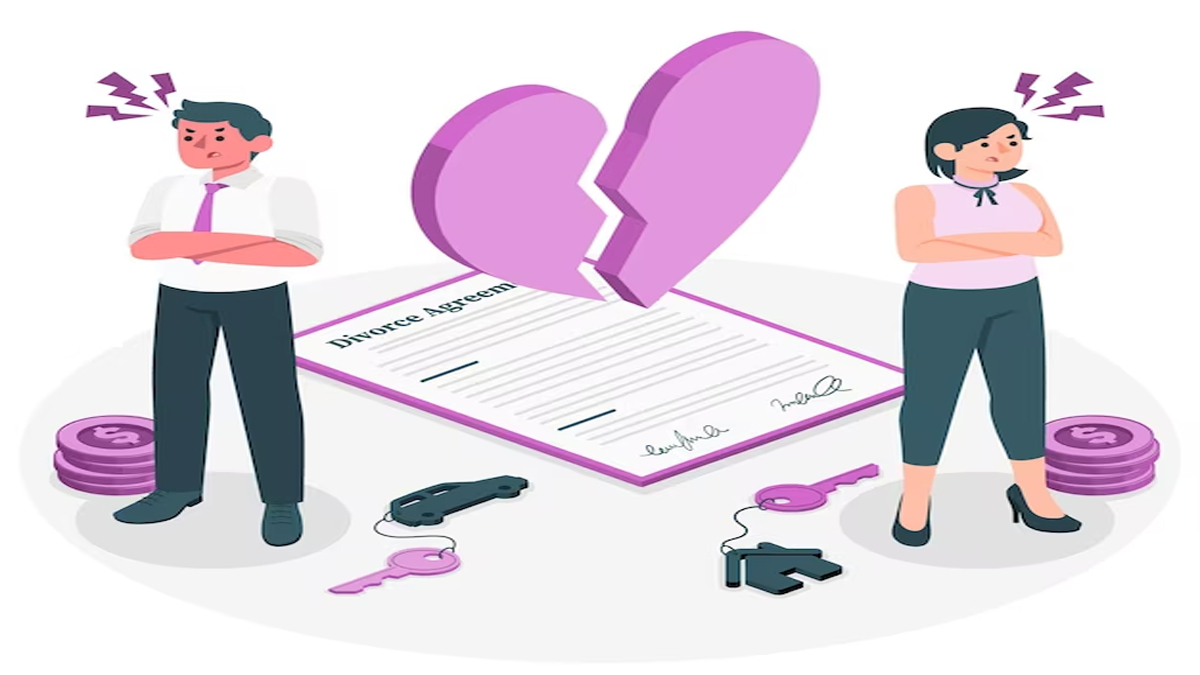
Divorce is the legal termination of a marriage by a court of law. Once a divorce decree is granted, the marital relationship ends completely. Both parties are no longer husband and wife in the eyes of law and are free to remarry.
Divorce resolves all legal ties between spouses, including rights related to cohabitation, inheritance, and marital obligations. However, issues such as alimony, child custody, and property division are settled as part of the divorce process.
Divorce can be obtained either through mutual consent or by filing a contested petition based on specific legal grounds.
Meaning of Legal Separation (Judicial Separation)
Legal separation, also known as judicial separation, is a court-recognized arrangement where spouses live separately without ending the marriage. The marital bond continues to exist legally, but the obligation to live together is suspended.
Judicial separation is granted under various personal laws, including the Hindu Marriage Act. It allows couples to take a break from the marriage without making a final decision to divorce.
During separation, spouses may still have certain rights and obligations towards each other, depending on the court’s order.
Legal Framework in India
Both divorce and legal separation are governed by personal laws in India. Under the Hindu Marriage Act, provisions exist for both divorce and judicial separation. Similar provisions are found in the Special Marriage Act and other personal laws.
The grounds for judicial separation are often similar to those for divorce, such as cruelty, desertion, and adultery. However, the outcome differs significantly.
Key Differences Between Divorce and Legal Separation
The most important difference lies in the status of marriage. Divorce permanently ends the marriage, while legal separation does not. After divorce, both parties are legally free to remarry. In contrast, remarriage is not allowed during legal separation.
Another major difference is the intention. Divorce is a final step taken when reconciliation is no longer possible. Legal separation, on the other hand, is often chosen when couples want time apart to reconsider their relationship.
In divorce, all marital rights come to an end, whereas in legal separation, certain rights may still continue. For example, spouses may still have inheritance rights in some cases.
Divorce results in complete legal independence, while legal separation maintains a limited legal connection between spouses.
Purpose of Legal Separation
Legal separation serves as a middle path between marriage and divorce. It provides couples with an opportunity to live independently while keeping the marriage intact.
It is particularly useful in situations where spouses are unsure about ending the marriage or have religious, social, or personal reasons to avoid divorce.
It also allows time for reconciliation. In many cases, couples use this period to resolve their differences and resume their relationship.
Grounds for Divorce and Legal Separation
The grounds for both divorce and legal separation are largely similar under Indian law. These include cruelty, adultery, desertion, mental illness, conversion to another religion, and other specified reasons.
Mutual consent is an additional ground for divorce, where both parties agree to end the marriage.
Although the grounds are similar, the relief granted by the court differs.
Procedure for Divorce
The divorce process begins with filing a petition in a family court. In mutual consent divorce, both parties jointly file the petition and agree on terms related to alimony, custody, and property.
The court provides a cooling-off period, usually six months, before granting the final decree.
In contested divorce, one party files a petition, and the case proceeds through hearings, evidence, and arguments. This process can take several years.
Procedure for Legal Separation
The procedure for judicial separation is similar to that of divorce. A petition is filed in court stating the grounds for separation.
After examining the evidence, the court may grant a decree of judicial separation, allowing the spouses to live apart.
Unlike divorce, there is no dissolution of marriage, and the couple remains legally married.
Financial Implications
Both divorce and legal separation involve financial considerations. Courts may grant maintenance or alimony in both cases, depending on the circumstances.
In divorce, financial matters are finalized as part of the settlement. In legal separation, financial arrangements may be temporary or subject to change if the couple reconciles or proceeds to divorce later.
Child Custody and Support
Child custody is a critical aspect of both divorce and separation. Courts prioritize the welfare of the child while deciding custody arrangements.
Custody may be granted to one parent, with visitation rights to the other. Financial support for the child is also determined by the court.
The principles governing child custody are similar in both divorce and legal separation cases.
Right to Remarry
One of the most significant differences is the right to remarry. After divorce, both parties are free to remarry legally.
In legal separation, remarriage is not permitted because the marriage still exists.
Possibility of Reconciliation
Legal separation allows for reconciliation. If the couple resolves their differences, they can resume cohabitation without any legal complications.
In divorce, reconciliation is not possible unless the couple remarries.
This makes legal separation a flexible option for couples who are uncertain about ending their marriage permanently.
Conversion of Separation into Divorce
If reconciliation does not occur, judicial separation can later be converted into divorce. After a specified period, either party may file for divorce based on continued separation.
This provides a gradual approach to ending the marriage.
Advantages of Divorce
Divorce provides a clear and final resolution. It allows individuals to move on with their lives, remarry, and achieve legal independence.
It also ensures final settlement of financial and property matters.
Advantages of Legal Separation
Legal separation avoids the finality of divorce and provides time for reflection. It respects religious or personal beliefs that may discourage divorce.
It also allows couples to maintain certain legal benefits associated with marriage.
Disadvantages of Divorce
Divorce can be emotionally and financially challenging. It involves legal proceedings, costs, and permanent separation.
Disadvantages of Legal Separation
Legal separation may create uncertainty, as the marriage continues without clarity about the future. It may also prolong disputes if reconciliation is not achieved.
Real-Life Example
A couple facing serious conflicts opted for judicial separation instead of immediate divorce. After living apart for a year and undergoing counseling, they decided to reconcile and resume their marriage. This demonstrates how legal separation can provide an opportunity to save a relationship.
FAQs
What is the main difference between divorce and legal separation?
Divorce ends the marriage, while legal separation allows spouses to live apart without ending it.
Can separated couples remarry?
No, remarriage is not allowed during legal separation.
Is legal separation a step before divorce?
Yes, it can lead to divorce if reconciliation fails.
Do financial rights continue in separation?
Yes, courts may grant maintenance during separation.
Which option is better?
It depends on individual circumstances and intentions.
Conclusion
Divorce and legal separation are two distinct legal remedies available to couples facing marital difficulties in India. While divorce provides a permanent end to the marriage, legal separation offers a temporary arrangement that allows space for reflection and reconciliation.
Choosing between the two depends on personal, financial, and emotional factors. Understanding their differences helps individuals make informed decisions and navigate the legal process effectively.